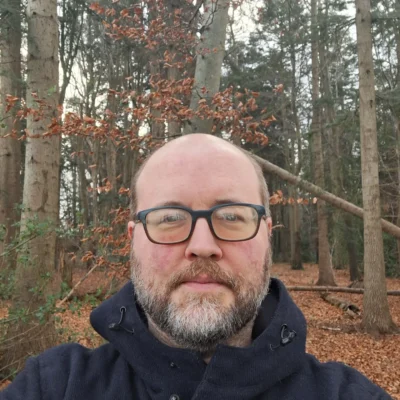
Am I A Universalist Quaker Friar?
Tags: ministry, quaker monasticism, quaker spirituality, universalist quakerism No Comments
I feel called to a monastic ministry as a universalist Quaker friar to teach and coach others how to be gentle with themselves and others. I am in the process of discerning the details.
As part of this journey, I am beginning to practice a consecrated, neo-monastic rhythm of life devoted to a gentle and fragile god. This involves daily silent worship, contemplative study, and communicative efforts to prevent and alleviate suffering, ideally through empathetic listening, and supportive teaching or coaching.
A Gentle and Fragile God
I am not sure whether the god I worship is one of many, but I am certain I have found a gentle and fragile one. It is not almighty or all-knowing, but it is all-loving and easy to encounter. It is composed of our gentle spirits. We are amongst its parts. By this, I literally mean some of our conscious experiences – some of our feelings and thoughts, especially those that involve a gentle and loving nature – are the spiritual parts of a divine mind. As our gentleness with ourselves and others increases or decreases, so too does it grow or diminish this gentle god. In this way, it is a fragile and contingent god. As parts of this god, we can communicate with it by communicating with each other, or we can communicate with it as a whole through prayer or other rituals. It influences us as we influence it. We are interdependent. Quakers often encounter this god/goddess/spirit/divinity, in part or as a whole, through silent worship together.
This world is clearly full of much emotional and physical pain and suffering. The prevalence and allocation of illness and death do not indicate any ultimate cosmic justice, but rather a cosmic tragedy for sentient beings like us. Our very metabolic need to consume each other as animals for physical survival is a testament to our tragic situation. Indeed, we must harm ourselves and others to delay our physical decay, and the physical universe, as far as we can tell, seems determined to damage and disorder itself, a process some call entropy. In the short run, the wicked often win and the virtuous often lose, and tragically, in the long run we all seem to lose ourselves. While there is no doubt that our lives are profoundly unfair, physically brief, and very painful, it is also true that many of us also experience great joy and hope as we encounter a gentle and loving spirit. I call this spirit a god, and it is what I think many people are seeking to reference when they speak of God.
A Universalist Quaker Monastic
Like all people, my life has had its twists and turns, ups and downs. I have certainly witnessed and experienced and know of significant pain and suffering. But this tragedy does not lead me to despair. I find myself called even further into the mystery of divine love.
As this calling has grown stronger, I have been forced to recognize and profess it. It is not without some trepidation that I share with you a deeply personal religious experience and vocational aspiration. It risks a range of harmful social and economic consequences.
But I deeply feel called to publicly align and harmonize myself with a gentle god. So I seek a consecrated life, one fully devoted to a divinity of gentleness. While such devotion requires intense daily attention, it does not imply inattention to or escape from family life or its obligations. From my perspective, attending to family life is completely compatible with attending to divinity. This is because that which is gentle of us, including friends and family, is that which is the god I worship. Thus, from this perspective, consecration does not require ascetic vows like they are found in the Christian or Buddhist monastic traditions. For example, it does not require the physical or emotional suffering that attends extreme celibacy or poverty or obedience. As I understand it, we do not need to escape the entities of everyday life, including our physical or social selves, to contemplate or commune with a gentle and loving god. We do not need to fully renounce this tragic world in order to express our compassion for it. We simply need to become more gentle with ourselves and others.
In my case, I feel called to focus my spiritual attention and service on the people around me within my physical and virtual social networks. While I recognize its depths, I am personally not called to a cloistered or closed contemplative community. In this sense, I identify more closely with the monastic life of a friar instead of a monk. I am still trying to discern whether my spiritual gifts also lend themselves to chaplaincy, but I feel increasingly certain that they at least lend themselves to teaching and coaching others. For this reason, I feel like friar is the most apt and easily understood name for the role to which I feel called to serve. To my knowledge, few Quakers have identified themselves as monastics, and none as a friar.
While I’m a Quaker theist, and open to exploring different understandings of the divine, it is important for me to note that I am personally not a Christian or Buddhist as I currently understand the terms. I use the religious language of “monastic”, “monk”, “friar”, “nun”, and “sister” in a sense more general than that is often described by Christian or Buddhist traditions. It is also language that has not been positively explored very much in the Quaker tradition, given its historical and radical opposition to clergy, especially the Catholic and Anglican conception of clergy. This is unfortunate, since there is much of the spirit to learn from these traditions.
For me, a Quaker monastic is a kind of Quaker minister who may or may not be Christian, and who seeks the divine through a rhythm of life, which is ordered in such a way that guides and structures ones attention on the divine. A Quaker monastic attempts to remain at all times deliberately focused on kindling the divine spirit in all people. All Quaker monastics seek to kindle the divine within themselves and their community. Quaker monks and nuns would typically seek a cloistered life away from society to help them focus on kindling the divine amongst a small group of visitors, while Quaker friars and sisters would seek a life more clearly within society to help them focus on kindling the divine with strangers. Quaker friars and sisters are mendicant in the sense that they practice radically trusting the stranger and exploring their spiritual dependency on the broader world. Quaker monks and nuns primarily practice trusting and spiritually depending on a particular place or within their small group of contemplatives. And a Quaker hermit, would seek even greater isolation from humans (although perhaps not other animals) to attend to the divine. They practice trusting and spiritually depending on themselves in relation to their environment, where ever that may be.
Furthermore, a Quaker monastic may or may not be a Quaker chaplain. Quaker chaplains, like chaplains of other religious traditions, typically provide spiritual presence and guidance to those coping with traumatic loss, such as illness, death, or imprisonment. Some Quaker monastics may lack these spiritual gifts, while some non-monastic Quakers may have them.
Universalist Quaker monasticism is also compatible with the pluralistic belief that there are many ways to profoundly and deeply encounter and minister the Divine outside of Quakerism or a monastic spiritual practice. One need not consciously seek consecration with a gentle and loving god to commune with it. However, monastics believe such explicit and conscious devotion through a more ordered life helps them commune by focusing their attention.
In my case, I seek a rhythm of life which welcomes and incorporates my diverse roles as husband, father, brother, son, uncle, nephew, cousin, immigrant, neurodiverse person, teacher/student, poet, philosopher, researcher, and coach.
Friends of the Fragile Light
I am looking for others who are interested in forming a virtual community of universalist Quaker friars, sisters, monks, and nuns so that we may support and develop our rhythms of life together and worship a gentle and fragile god.
Please contact me if you are interested.